

Production AI · 70+ Engagements · Global Delivery
AI case studies that show you exactly how production AI gets built.
Real architectures. Named architects. Reference calls on request.
Browse 70+ enterprise AI engagements across manufacturing, healthcare, BFSI, logistics, and construction — with the full decision log behind every outcome.
No sales reps. Talk to the architect.
Credentials · Architect · ISO 27001 verified · Q2 2026
NVIDIA Certified AI Architect
ISO 27001 Information Security
NVIDIA Inception Partner
Upwork Top Rated Plus (Top 3%)
AWS Activate Startup Ecosystem
Microsoft for Startups
Featured this quarter · Q2 2026
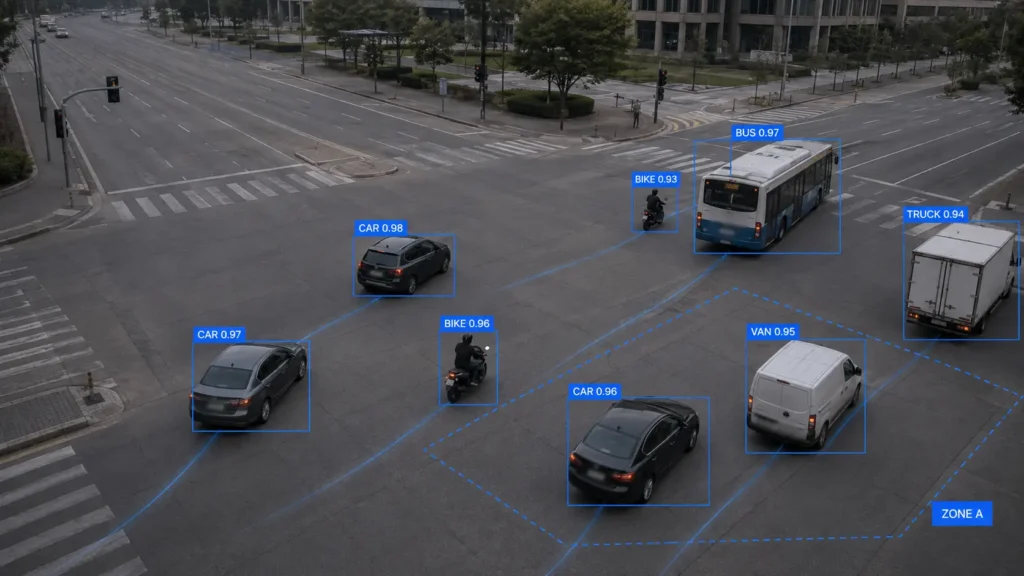
70% faster civil plan approvals — replacing 3-week bureaucratic review with 4-day AI inspection.
Tech stack
5 detailed case studies. 100% production-shipped work.
These are the five engagements where the client signed off on full public attribution, the architecture pattern is reusable, and the metrics are independently verifiable. Each card shows the before-state, the after-state, and links to the full case study with architecture diagrams and decision logs.
70% Faster Civil Plan Approvals with AI-Assisted Inspection
Computer vision pipeline reads civil construction plans, runs automated compliance checks, and routes exceptions for human review. Plan reviewers now handle judgment calls, not checklists. Audit-ready logs included.
12x Faster Medical Coding with HIPAA-Compliant Document AI
Document AI pipeline classifies clinical notes, suggests ICD-10 and CPT codes with 94% accuracy, plugs directly into Epic EHR via HL7 FHIR. Coding turnaround dropped from 48 hours to under 4.
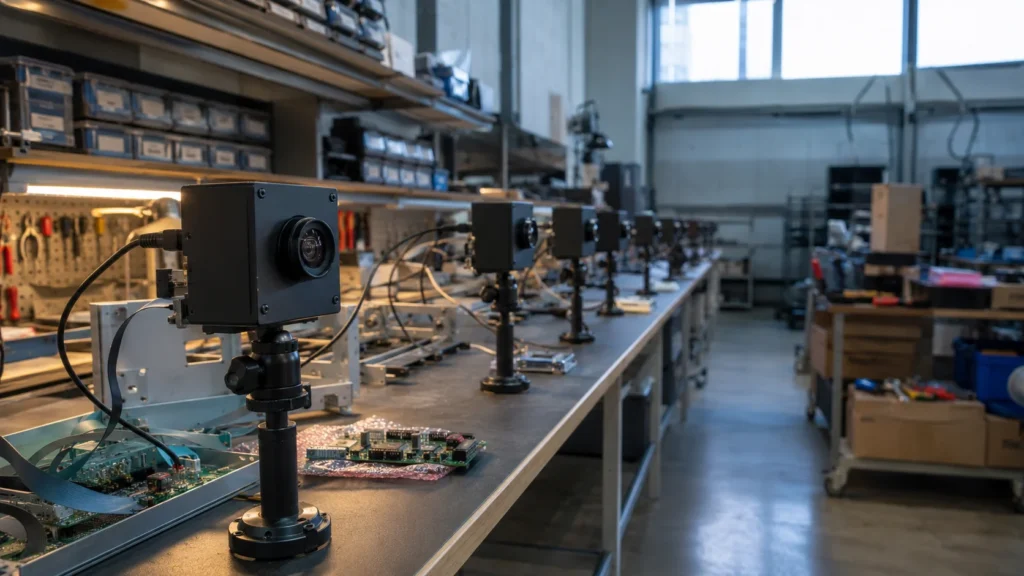
99.2% Defect Detection Accuracy at the Factory Edge
YOLO-based real-time visual inspection on NVIDIA Jetson processes 200+ units per hour at the line. Sub-50ms reject decisions. Customer-facing defect escapes dropped 85% in the first quarter post-deployment.
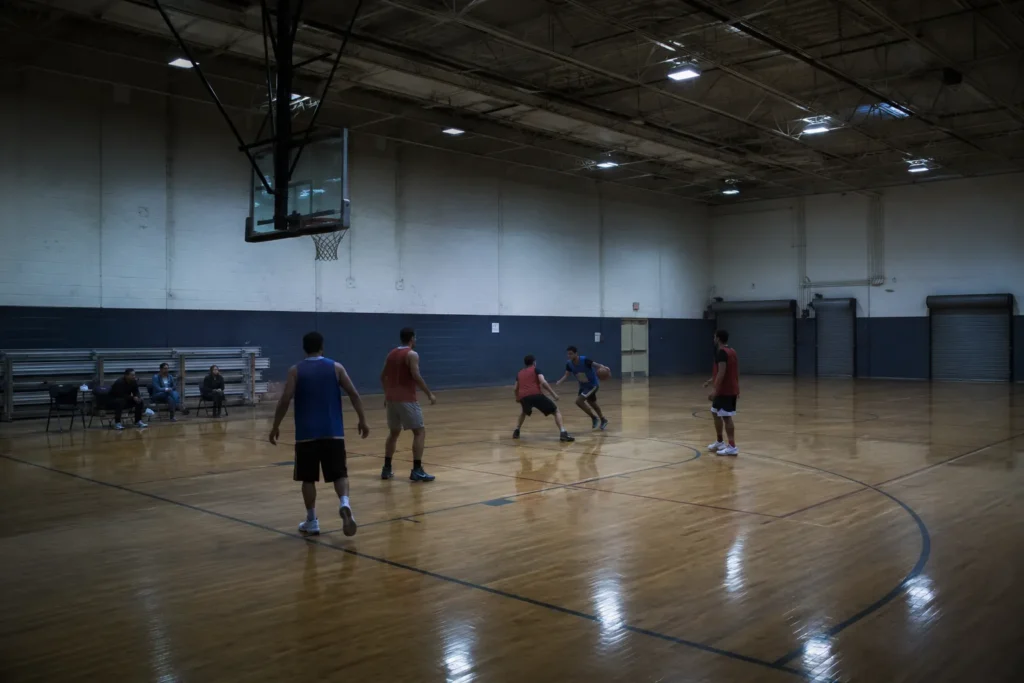
Real-Time Multi-Camera Player Tracking for Coaching Staff
Multi-camera computer vision pipeline detects, tracks, and re-identifies players across multiple synchronized feeds. Outputs frame-level movement data, speed metrics, and tactical heatmaps for coaches and broadcast overlays.
Enterprise Document Workflow Automation Across 47 Formats
AI pipeline classifies, extracts, and routes documents across 47 source formats — replacing manual KYC review, compliance checks, and regulatory reporting. Manual review time reduced by 80% with full audit trail.
No cases match this combination yet — try removing a filter, or send us a brief and we’ll tell you if we’ve done it before.
Send a brief →Your industry might not be in the 5
Don’t see your industry? That’s because we publish what we ship, not what we promise.
We’ve delivered engagements in retail, education, energy, agriculture, and 6 other sectors that aren’t visible above — most under NDA. Tell us what you’re scoping. We’ll tell you within 24 hours whether we’ve solved something similar.
Book 30-min architecture call- No sales reps · talk to the architect
- No prep needed · bring questions or a brief
- Full NDA on request · we’ll send one before the call
Three engagements with the steepest documented before/after.
These are the three engagements that produced the strongest measurable shift between manual baseline and production deployment.
70%
faster civil plan approvals
3 weeks → 4 days
View full case99.2%
defect detection at factory edge
Manual QC → 99.2% automated
View full case12×
medical coding turnaround
48 hours → 4 hours
View full caseBrowse case studies by industry.
Click a tile to filter the grid above, or click the deep link inside each tile to jump to the corresponding industry page.
Manufacturing & Industrial
Featured: Tire defect detection at factory edge (99.2% accuracy)
Healthcare
Featured: 12x faster medical coding with HIPAA-compliant Document AI
BFSI (Banking, Financial Services, Insurance)
Featured: Document AI for 47-format KYC and regulatory workflow (80% time saved)
Construction & Civil
Featured: 70% faster civil plan approvals with AI-assisted inspection
Logistics & Supply Chain
Featured: Warehouse computer vision for inventory and dispatch accuracy
Browse case studies by AI capability.
Click a tile to filter the grid above, or click the service-page link to read the full capability page.
Computer Vision
Featured: Tire defect detection (99.2% accuracy)
Generative AI
Featured: Document workflow GenAI assistant
Document AI
Featured: Medical coding (12x faster turnaround)
RAG Systems
Featured: Internal knowledge base for technical support
AI Agents
Featured: Procurement workflow automation copilot
Edge AI
Featured: Factory-edge inference on NVIDIA Jetson
Robotics & Hardware
Featured: Vision-guided pick-and-place robotic arm
Video Analytics
Featured: Multi-camera player tracking (real-time)
12 anonymized engagement snapshots — work behind NDA.
These are anonymized snapshots of engagements where the client has not yet cleared us to publish a full case study, or where the architecture pattern is reusable but the business context is proprietary. The headline metric, capability, tech stack, and industry are accurate — only client identity and proprietary detail are withheld.
Document AI + RAG
84% straight-through processing rate on new policy applications
AI Agent
10× faster pitch-book generation with auto-verified data sourcing
Computer Vision · Edge AI
Zero false-negative defect escapes across 18-month production run
Computer Vision · Robotics
30% reduction in vision-guided pick cycle time on robotic arm cell
Computer Vision
Radiology triage assistant with 96% sensitivity on flagged scans
RAG · AI Agent
Internal clinical guidelines assistant used by 240+ care providers
Computer Vision · Edge AI
98% inventory location accuracy via overhead-camera tracking
Generative AI · NLP
Auto-generated multilingual delivery exception responses (12 languages)
Computer Vision · Video Analytics
Real-time aisle compliance and out-of-stock detection across 80 stores
Computer Vision · Edge AI
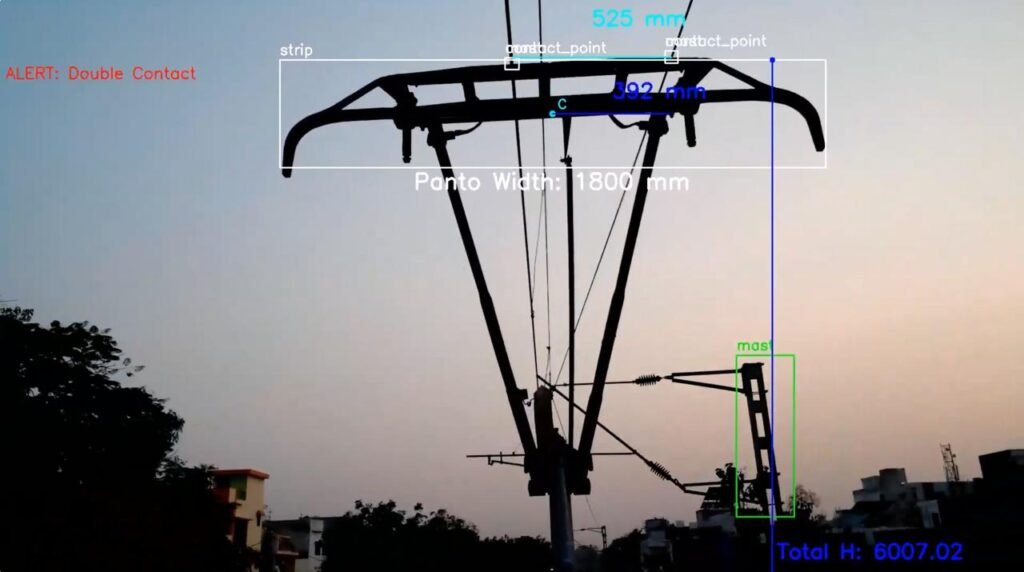
Drone-captured infrastructure inspection automated for 4,000+ km of grid
Computer Vision · IoT
12% yield improvement via pest detection and growth-stage classification
Computer Vision · Video Analytics
PPE compliance monitoring with 94% precision across 8 active sites
Scoping something not on this list? We’ve probably done it.
Send a 2-3 sentence brief describing what you’re scoping. Within 24 hours we’ll tell you whether we’ve shipped a comparable engagement, what the architecture looked like, and what we’d quote as a starting point. No formal RFP needed.
Actually works in production
Most of our engagements never appear in a public case study.
Yours probably won’t either. That’s fine — we’d rather ship to production than build for our portfolio.
No commitment · No sales reps · Talk to the architect directly
Editor’s note
Why we don’t publish every engagement we ship.
Most case study pages are sales documents pretending to be portfolios. Vendors publish the engagements that produced the cleanest before/after metrics, the most quotable client lines, and the least proprietary architecture. The buyer assumes this is representative work. It almost never is.
I want to be straight with you about how this page gets curated. We have shipped 70+ enterprise AI engagements since 2018. You see 5 detailed case studies and 12 anonymized snapshots on this page. Here is the actual rule I apply when deciding what to publish.
A detailed case study goes up only when three conditions are all met. The client has signed off on attribution and the specific metrics shown. The architectural pattern is genuinely reusable, so reading it gives the next buyer something they can apply. The outcome is independently verifiable — meaning if you ask for a reference call with that client, we will set it up.
Anonymized snapshots cover the much larger middle of our work. Many of our largest engagements live here permanently — particularly in BFSI, healthcare, and pharma, where NDAs run for years and the architecture details are proprietary by design. The snapshot tells you the industry, the capability, the headline metric, and the tech stack. That is the most honest version of the engagement we can publish without breaking trust with the client.
If you are evaluating us against larger generalist firms, the question worth asking is not ‘how many case studies do they have’ — every 1,000-person firm has many. The question is ‘do the people who built them still work there, and can I talk to them directly.’ On this page, every case study and every snapshot reflects work the current team architected and shipped. The architect on the call is the architect on the project.
Connect on LinkedIn
The team behind the work
The architect on the call is the architect on the project.
Every case study and snapshot on this page reflects work this team architected and shipped. No outsourced subcontractors. No staff augmentation pass-throughs. When you book the call, the people in this photo are the people who’ll be in the room.
Free reference architectures from our most-deployed patterns.
These are the three architecture patterns we deploy most frequently across our case studies. Each PDF is a single document covering the component diagram, the technology choices we made, the trade-offs we considered, and the failure modes we engineered for.
Computer Vision Factory Inspection Pattern
End-to-end reference for deploying YOLO-based visual inspection at the factory edge. Covers camera selection, edge hardware sizing for NVIDIA Jetson, TensorRT optimization path, MQTT-based control integration, dataset labeling protocols, drift monitoring, and the rollback strategy when a model degrades in production.
What’s inside
- Component diagram: camera → edge box → MES/SCADA → operator dashboard
- Hardware sizing table: Jetson Nano vs Xavier NX vs Orin Nano vs Orin AGX — when to choose each
- Latency budget breakdown: 50ms target, where each component must land
- Drift detection thresholds and rollback triggers
- Common failure modes and their architectural responses
RAG System Reference Pattern
Production RAG reference covering ingestion, chunking, embedding, vector storage, retrieval, reranking, generation, and observability. The pattern this PDF documents is what we deploy for internal knowledge bases, technical support assistants, and clinical guidelines retrieval in our healthcare engagements.
What’s inside
- Component diagram: source documents → chunker → embedder → vector store → retriever → reranker → LLM → response
- Chunking strategies: fixed vs semantic vs hierarchical — when each works and when it fails
- Vector store selection guidance: Pinecone vs Weaviate vs Qdrant vs PostgreSQL pgvector
- Reranker integration patterns and their cost-quality trade-offs
- Hallucination guardrails: structured-output prompting, citation requirements, refusal handling
Document AI Pipeline Reference Pattern
End-to-end document AI pipeline reference covering ingestion across 40+ formats, classification, structured extraction, named entity recognition, validation, exception handling, and audit logging. This is the pattern behind our medical coding and BFSI compliance case studies.
What’s inside
- Component diagram: source intake → format normalization → classifier → extractor → validator → output adapter → audit log
- Format support matrix: PDFs (born-digital and scanned), TIFFs, DOCX, XLSX, image-based, scanned forms
- Extraction strategies: schema-driven (Azure Form Recognizer, AWS Textract) vs LLM-driven (GPT-4o, Claude) — when each is correct
- Compliance integration: HIPAA, SOC 2, GDPR audit-log requirements
- Exception routing: confidence thresholds and human-in-the-loop handoff patterns
Browse case studies by outcome type.
Click a tile to filter case studies by the kind of measurable outcome they delivered.
Speed (cycle-time reduction)
Featured: Civil plan approvals, medical coding, pitch-book generation
Accuracy (error rate / detection)
Featured: Tire defect detection, radiology triage, PPE compliance
Cost (operational efficiency)
Featured: Document review automation, KYC processing, warehouse vision
Compliance (regulatory / audit-ready)
Featured: BFSI document AI, HIPAA medical coding, infrastructure inspection
How an engagement becomes a case study.
Every case above followed the same four-phase path. Here’s what each phase actually contains.
-
PH-01
Discovery & scoping
1-2 weeksWhat happens
30-min architecture call → written scoping summary → optional NDA → detailed proposal with fixed-cost POC scope.
What the client sees
A proposal that names a real architect, defines success metrics, and quotes a fixed POC price.
-
PH-02
POC sprint
3-6 weeksWhat happens
Architecture design → data ingestion → model training and validation → POC demo on representative data → quantified results and decision document.
What the client sees
A working demo and a written decision document on whether to proceed to production.
-
PH-03
Production build
6-16 weeksWhat happens
Production architecture → integration with client systems → deployment to client infrastructure → user acceptance testing → hand-off documentation.
What the client sees
A production deployment, a runbook, and a transition plan.
-
PH-04
Operations & case-study clearance
OngoingWhat happens
Monitoring → drift detection → quarterly model refresh → client-side metrics tracking → publication clearance discussion at 6-12 months.
What the client sees
Stable production system. Case study published only if all three publication conditions are met (see Editor’s Note).
Engagements that don’t follow this path: staff augmentation engagements (where we embed engineers into the client’s team and the client owns the architecture) follow a different model. Those engagements aren’t represented in the case studies above because the architecture isn’t ours to publish.
How our case studies compare to typical vendor portfolios.
Most enterprise AI vendors publish case studies that look the same: a client logo, a problem sentence, an outcome metric, and a quote. The table below uses the evaluation criteria that actually matter when a CTO is deciding whom to trust with a real production engagement.
| Evaluation criterion | Brainy NeuralsCase studies | Typical generalist vendorPortfolio |
|---|---|---|
| Architectural depth disclosed | Component diagram, technology choices, and trade-off log included in every detail page. Reference architecture PDFs available for the most-used patterns. | Outcome metric only. Architecture occasionally summarized at a marketing level. Detailed component diagrams rarely available. |
| Named architect attribution | Every detail page names the architect who led the engagement, with credentials and a LinkedIn link. Buyer can verify the architect still works here. | Generic ‘our team delivered’ attribution. Named individuals (if any) are senior salespeople, not the engineers who built the work. |
| Trade-offs and failure modes documented | Each detail page includes a ‘what we considered and rejected’ section, plus the failure modes the architecture engineers for. | Trade-offs treated as proprietary or simply not discussed. Failure modes rarely acknowledged. |
| Reference call availability | Reference calls available on request for every detailed case study, mediated by us. Clients have agreed to take the call at engagement signing. | References promised but rarely delivered. Calls often facilitated only at proposal stage and only with the client’s marketing contact. |
| Publication standard transparency | Three explicit conditions for publication (client sign-off, reusable pattern, verifiable metrics) — disclosed in the editor’s note on this page. | Publication criteria not disclosed. Case studies appear to be cherry-picked from the most flattering engagements. |
Frequently asked questions.
If your buying committee is asking it, we’ve answered it here. If it’s not here, ask on the call.
FAQ-01Do you have case studies in my industry?
FAQ-02Can I get reference calls with your clients?
FAQ-03Why are some engagements anonymized?
FAQ-04What separates a ‘case study’ from an ‘engagement’ on this page?
FAQ-05Can I see actual architecture diagrams and code?
FAQ-06How recent are these case studies?
FAQ-07Did you only publish your best work?
FAQ-08How does my engagement become a case study like the ones above?
Related resources.
Continue exploring — by capability, by industry, or by talking to the architect directly.
Services hub
11 specialized AI development services. Computer vision, GenAI, document AI, RAG, agents, edge AI, and more — each page covers the full capability with case examples.
Blog & insights
Engineering deep-dives, architecture pattern explainers, and original research on production AI deployment. New posts weekly.
About Brainy Neurals
Who builds the work. Team, certifications, partnerships, ISO 27001 posture, and how we work with global clients across timezones.
Founder profile · Mitesh Patel
NVIDIA Certified AI Architect, Upwork Top Rated Plus (Top 3%), 9 years in production AI. The architect who leads the engagements above.
Talk to the architect
Ready to talk about your specific architecture?
Skip the discovery questionnaire. Book a 30-minute call with Mitesh Patel directly. Bring a brief, a question, or just a problem you’re scoping. You’ll leave with a clear sense of whether we’re the right fit.
Book 30-min architecture callNo sales reps · No prep needed · Full NDA on request