




Home / Case studies / AI Delivery Challan Automation in Textile Manufacturing
Case study · Textile manufacturing · Document AI
AI Delivery Challan Automation in Textile Manufacturing
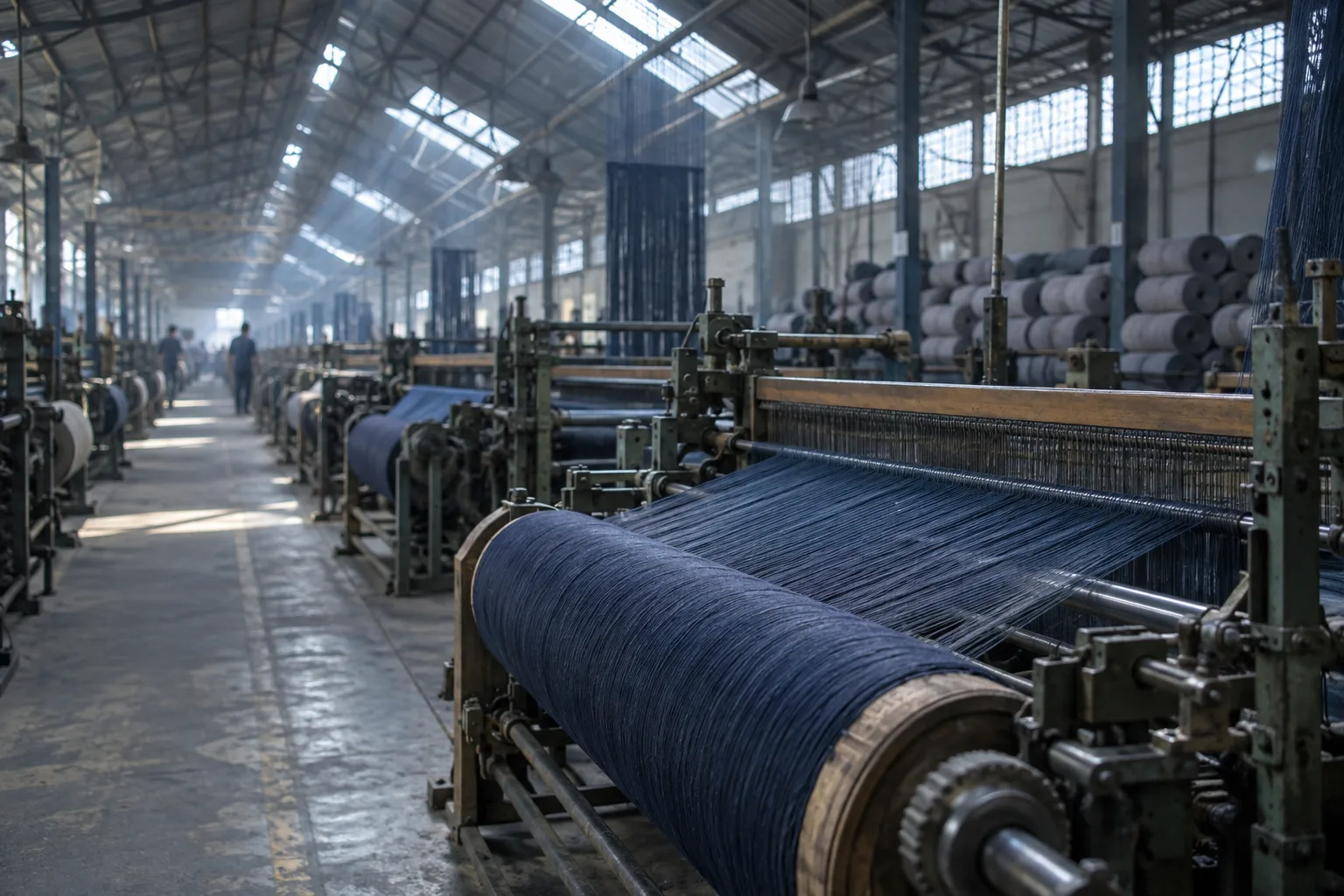
An Indian denim manufacturer needed delivery challan automation, because one clerk had to retype every handwritten slip from its five partner weaving mills. Brainy Neurals built a textile ERP that uses a local vision model to read photographed challans into ledger rows. Everything runs on the client’s own server, where clerks photograph each slip on a phone & check the rows beside it. Data entry per challan fell from 10 to 15 minutes to under five seconds.
Under 5 s
Data entry per challan
5 mills
On one live ledger
Own server
Where every challan is read

Published October 2026
At a glance
Four short answers sum up the build, followed by the facts of the engagement.
What problem did this solve?
An Indian denim manufacturer tracked outsourced weaving at five partner mills on handwritten delivery challans. Typing each one took 10 to 15 minutes, & billing ran on spreadsheets that broke easily.
What did Brainy Neurals build?
Brainy Neurals built a textile ERP & challan intake for an Indian denim manufacturer that outsources weaving to five mills. A local vision model reads every photographed challan.
What changed after it went live?
Data entry per challan dropped from 10 to 15 minutes to under five seconds. Capital on external looms became visible every day, & billing no longer depends on spreadsheets.
Who else could use this?
Any business that receives goods on paper from outside partners can use the same pattern. Proof-of-delivery slips in logistics, delivery tickets on construction sites, weighbridge slips & goods received notes all qualify.
Industry
Textile manufacturing
Sub-vertical
Denim jobwork weaving
Client
Indian denim manufacturer
Engagement
ERP & document AI
Timeline
Not disclosed
Capabilities
Document AI & enterprise software
Delivery
Project-based delivery
Why did challans need retyping every day?
Challans needed retyping every day because an Indian denim manufacturer weaves nothing on its own floor. Warp beams leave for five partner mills, & grey fabric returns weeks later. Every movement rides on a paper challan, which is why the company went looking for delivery challan automation.
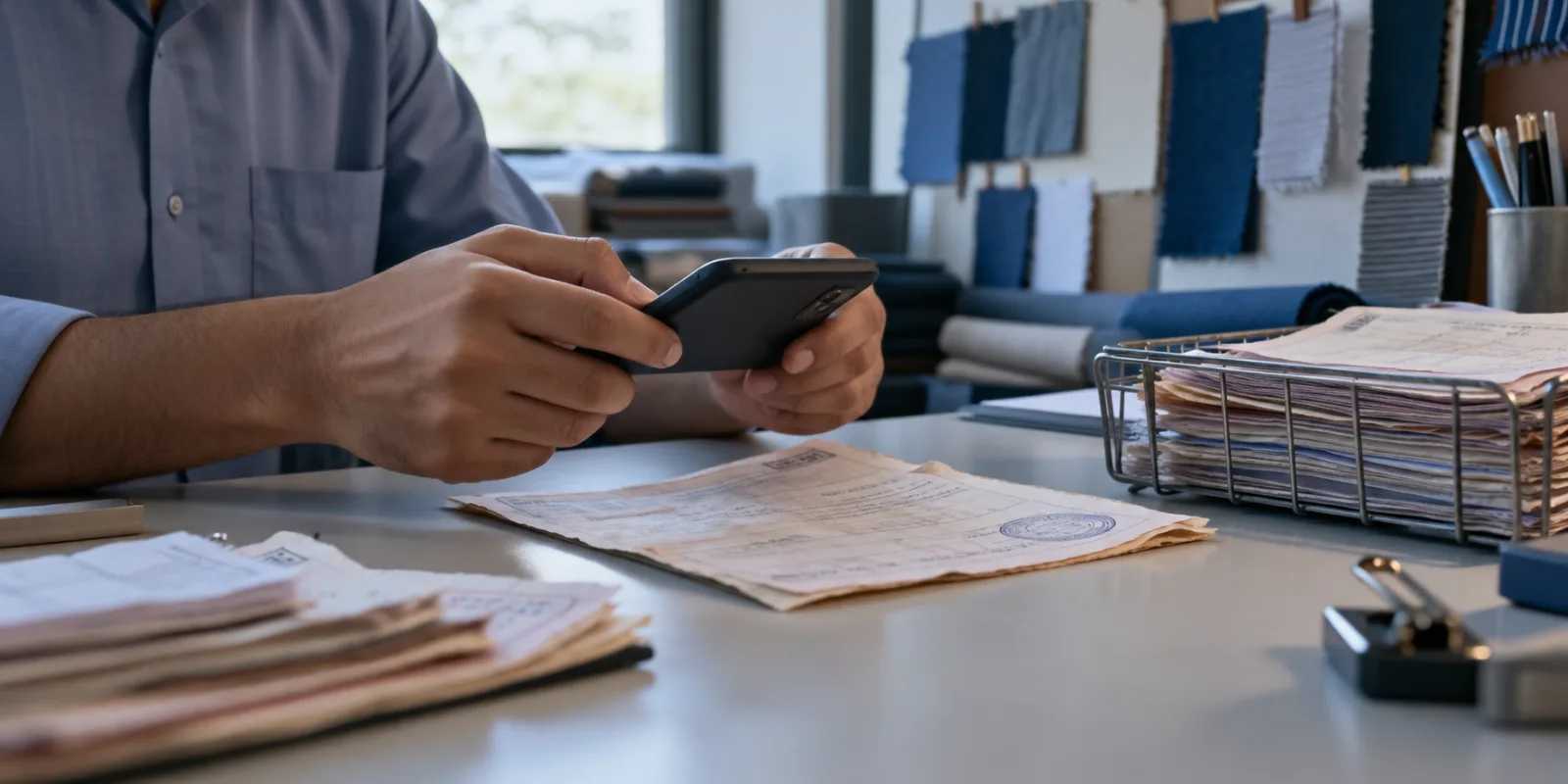
Those challans arrived as handwritten slips or phone photos of stamped forms, & each mill used its own layout. The company’s whole intelligent document processing layer was one clerk reading paper & typing it in.
Slow typing
Each challan took a clerk many minutes to type, & dozens could arrive in a single day.
Mixed layouts
Every mill used its own layout, so merged cells & missing columns had to be decoded before typing.
Coded dates
A date written as 300626 meant June 30, 2026, but only when the clerk caught it.
Hidden capital
Warp beams sat on outside looms as locked yarn capital, invisible between dispatch & receipt.
Drifting logs
Production & receipt logs drifted apart, so month-end turned into a hunt for missing rows.
Research on data entry backs this up. A 2011 study found visual checking left almost thirty times the errors of double entry, & it barely beat single entry[1].

What do teams usually try first?
Teams usually try one of four routes first, & each one is reasonable. Optical character recognition, or OCR, sits at the center of three of them.
Three common routes each stop at a wall that the fourth route clears.
Cloud OCR services
Gets right
Strong on printed text
Where it stops
Handwriting, merged cells & pages leaving your network
Still suits
Uniform printed documents
Packaged textile ERP
Gets right
Solid standard workflows
Where it stops
Assumes typed input, & jobwork billing never fits
Still suits
Mills weaving in-house
More data entry staff
Gets right
Flexible, with nothing to build
Where it stops
Cost rises with volume & errors stay
Still suits
A few challans a week
Local vision AI, our route
Gets right
Every format, on your own server
Where it stops
Weeks of parser & review work
Still suits
Daily paper from many partners
An image-based table recognition benchmark found commercial extraction tools trailing far behind a purpose-built model, even on clean printed tables[2].
How we designed the two-layer platform
Brainy Neurals built the platform as two layers on one server that the client owns. The intake layer runs a multimodal vision model behind a local inference endpoint & reads each photographed challan into structured rows.
The ledger layer holds the ERP itself, with production & receipt tables for each mill generated from one central registry. Every challan is read & stored on the client’s own server, & nothing ever leaves it.
Every challan is read & stored on the client’s own server, & nothing ever leaves it.
Every stage from photo to bill runs on the client’s own server, & no page leaves it.
The first decision was where the vision model would run. Challans carry the rates & party terms a competitor would love to read, so cloud OCR was ruled out. A local model also let us steer the parser for each mill, where a generic service offers one answer for all.
The second decision was the output contract between the model & the parser. We made the model answer with a structured table every time, because loose text is where columns merge & cell boundaries break. Reading a handwritten table is a generative AI development problem dressed up as OCR.
Mitesh Patel set the on-premise intake architecture & checked every billing formula against the spreadsheets it replaced.
The technology stack we used
The technology stack keeps a spreadsheet feel for clerks in the browser, while accountants keep their formulas, now computed for them. Every part of the workflow automation stack runs on one server the client already owned.
Vision & intake
Vision model
What we used
A self-hosted multimodal document model
Why
Reads handwritten tables as tables
Ruled out
Cloud OCR services
Inference serving
What we used
A dedicated local inference server
Why
Answers in seconds on owned hardware
Ruled out
Per-page cloud pricing
Ledger & rules
Database
What we used
A relational database with strict schemas per mill
Why
Bad rows fail early & loudly
Ruled out
One loose shared table
Mill registry
What we used
One frozen registry that defines every mill
Why
Each mill’s tables & columns declared once
Ruled out
Per-screen configuration
Sync engine
What we used
Two-way production & receipt sync
Why
Edits & deletions cascade both ways
Ruled out
Nightly batch syncs
Billing engine
What we used
Every jobwork billing formula computed per row
Why
The same bill every time
Ruled out
Spreadsheet templates
Application & delivery
Application
What we used
Python services with spreadsheet-style grids
Why
Clerks keep the grid while rules move underneath
Ruled out
Form-based entry screens
Deployment
What we used
The client’s own server
Why
Paperwork & rates never leave
Ruled out
Cloud hosting
How does one challan get processed?
Delivery challan automation handles each slip in six steps, in the order the system sees it.
- A clerk photographs the day’s challans on a phone & uploads them to the platform.
- The server scales each photo & sends it to the local vision model, asking for a table back.
- The model returns rows & columns as structured cells in the paper’s layout.
- The system matches stamps & party codes against the registry to identify the sending mill.
- The clerk confirms or corrects the parsed rows beside the original photo.
- The confirmed rows land in the mill’s receipt ledger & sync into its production log, which updates billing & the dashboard.
Six steps run for every challan, & a person touches exactly two of them.
A person handles the challan twice, at the photo & at the review, & the system does the rest.
What nearly stopped the first build?
Three problems nearly stopped the first build, & they arrived in this order.
The first parses read the words but lost the table. Merged cells, missing headers, skewed photos & compact handwritten dates pushed columns into each other. Challan numbers ended up sitting inside date fields. A benchmark of multimodal models across 29 datasets lists handwritten text among their clearest weaknesses[3].
Identifying the sender was the second problem. A challan rarely says which mill wrote it, & two of the five partners share half a name. Stamps, signatures, party codes & header text were the only reliable clues, & every mill used them differently.
Ledger drift was the third & last problem. A row edited in production went stale in receipts, & deletions left gaps in the numbering. Month-end reconciliation turned into a slow dig through old rows. These are the weeks when clients bring in specialist engineers instead of learning it the slow way.

How we fixed each problem
We fixed each problem with a rule, & none of the rules was found quickly.
An AI proof of concept exists to surface exactly this list before anything is promised.
Tables now keep their columns, unclear senders go to a person, & one edit updates both ledgers.
Structure
We changed the output contract so the model returns a full table with every cell boundary intact. Recovery rules for each mill rebuild compact dates & composite lot numbers. A truncated parse gets repaired, never thrown away. Any parse that can’t place a column now fails in plain sight for review, without guessing.
Identity
Sender detection became a staged match over stamps, signatures, header text & party codes. Anything unclear goes to the review screen, with the photo right beside it.
Drift
Every edit & deletion now cascades between the production & receipt ledgers on its own. Sequence numbers close up after every delete, which keeps the audit trail free of gaps. Double-entry bookkeeping solved the same drift problem in fifteenth-century Venice.
What changed after go-live?
Data entry per challan fell from 10 to 15 minutes to under five seconds. The client reports the same result across daily challans from all five mills.
Entering one challan
Before
Minutes of typing per slip
After
Seconds, plus a human check
Jobwork billing
Before
Thirteen formulas per row in a spreadsheet
After
Computed automatically & identical every run
Capital on external looms
Before
Invisible between dispatch & receipt
After
Live, per mill & per beam
Production against receipts
Before
Reconciled monthly by hunting
After
Matched continuously in both directions
Allocating the next beam
Before
Memory & habit
After
A six-month scorecard on five measures
We haven’t published an error-rate or capital-recovery figure. The client reports that both moved the right way, but neither has been measured well enough to print.
Day to day, the change is quieter than the numbers suggest. A clerk photographs paper instead of retyping it, & a director watches capital on looms the company doesn’t own.
Does your paperwork arrive from outside partners?
Send a few sample slips & a line about your daily volume. We’ll tell you how much of the typing a vision model could take off your clerks.
What runs in production today?
Our delivery challan automation platform runs in production on the client’s server & reads paperwork from all five mills every day. Clerks photograph challans & confirm each parse, & the ledgers stay matched without a month-end hunt. Managers start each morning on the capital dashboard, watching pending meters & beam ages.
A six-month scorecard now steers which manufacturing partner receives the next high-value beam. The scorecard ranks each mill on volume, pace, reporting discipline & contraction loss, which is the shrink between yarn dispatched & fabric returned. Those spreadsheets are gone, & nobody has asked for them back.

What would we do differently?
We’d change four things if we started the build again today.
Fix the output contract before the model
We began with loose text extraction & later rebuilt the intake around table output. Choosing the answer format first would have saved that rebuild.
Put the photo beside every parse
Trust arrived through the review screen, one row at a time. Automation earned trust because every parsed row sat beside the photo it came from.
Declare the mills once
Early screens each carried their own mill settings, & those settings drifted apart. One central registry, declared in code, ended a whole class of bugs.
Treat deletions as real work
Rows get deleted in live operations all the time, & for good reasons. Designing cascade & renumbering early beats bolting them on after the gaps appear.
Automation earned trust because every parsed row sat beside the photo it came from.
Where else does delivery challan automation fit?
Challan automation fits wherever goods still move between companies on paper. The same build turns photos of delivery paperwork into structured ledger rows, read cell by cell by a vision model.
Logistics
The equivalent problem
Proof-of-delivery slips from hundreds of drivers
What changes in the build
Retrain on delivery-slip layouts & match them to dispatch manifests
Construction
The equivalent problem
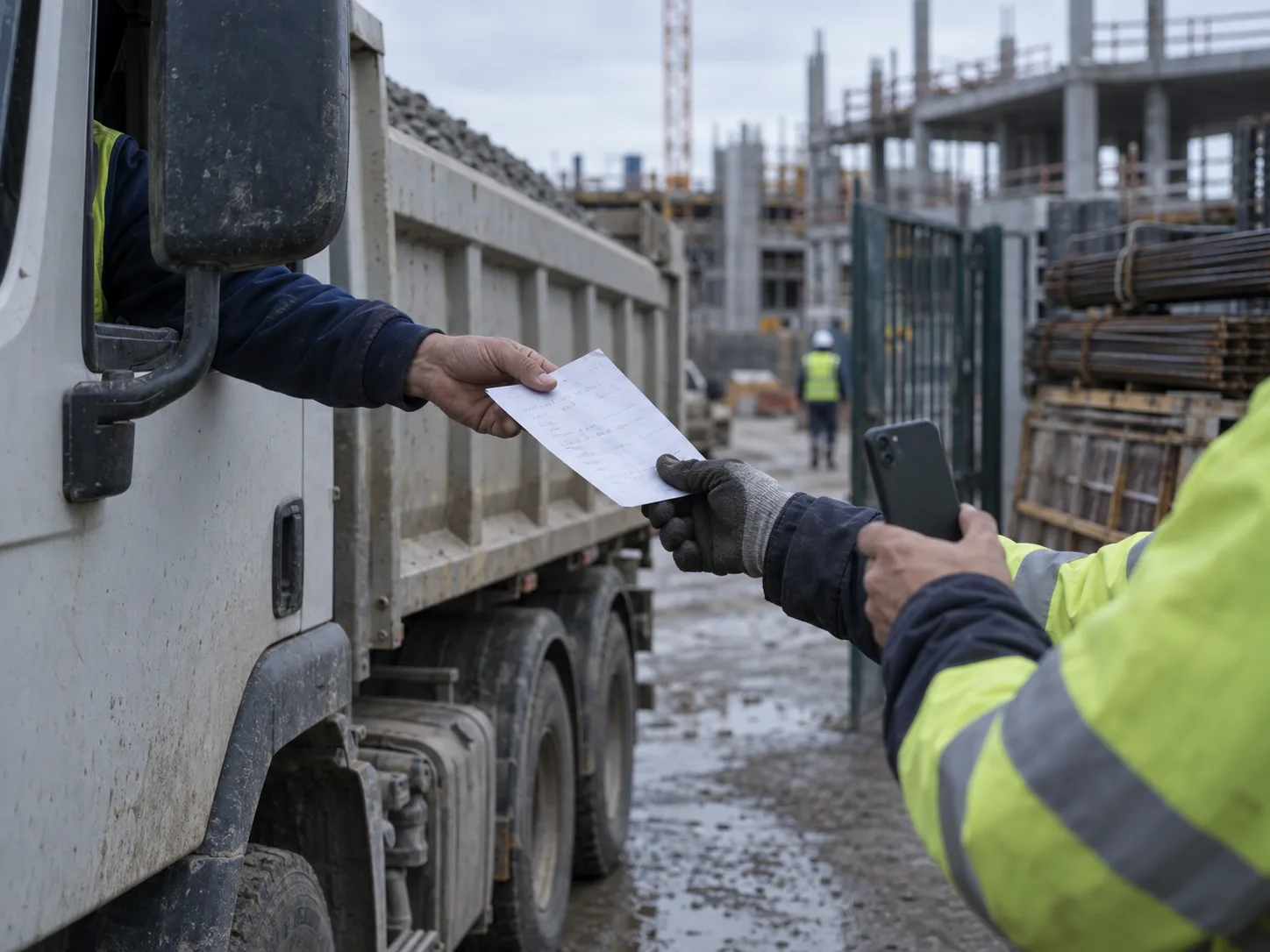
Subcontractor tickets for steel & aggregate
What changes in the build
Tie each parsed ticket to a project cost code
Retail distribution
The equivalent problem
Goods received notes at store back doors
What changes in the build
Match rows against purchase orders & flag shortfalls
Food processing
The equivalent problem
Weighbridge & procurement slips from farm suppliers
What changes in the build
Settle by parsed weight & grade
Contract manufacturing
The equivalent problem
Jobwork challans moving parts between plants
What changes in the build
Add batch lineage & an audit trail per part
Porting the build needs sample documents from each sender & recovery rules for each format. It also needs a review screen the clerks actually trust.
Questions buyers ask about challan automation
Can AI read handwritten delivery challans?
Yes, with a vision model built for documents instead of plain OCR. The model reads the table as a table, so handwritten rows keep their columns. A human review screen catches whatever the handwriting still defeats.
How does one system handle five challan formats?
A central registry defines each sender once, covering its tables, columns, code formats & quirks. The parser identifies the sender from its stamps & codes, then applies the recovery rules written for that mill. A sixth format means extending the registry, without rebuilding the system.
Does challan data leave the company during AI processing?
No, as long as the model runs where the documents live. This build keeps the on-premise model on the client’s server, so photos, rates, quantities & party terms stay inside the building. Pages sent to cloud OCR services leave your network by definition.
How accurate is AI document extraction on handwriting?
Accuracy depends on the handwriting, the layout, the photo & the model, so we quote no universal figure. Every parse here sits beside its photo for a human check before rows enter the ledger. Repeated corrections show us which recovery rule to fix.
How long does a delivery challan automation build take?
A working parser on your documents usually takes a few weeks, because each format needs its own rules & testing. The ledger layer follows once parsing holds, with sync & billing built on top. A pilot on one document type is the sensible first step.
What does an AI document processing system cost?
Cost depends on the document formats, the integrations, the volumes & what already exists. Brainy Neurals scopes it from sample documents & a short call, then quotes a fixed price. An AI readiness assessment first shows whether your paperwork suits parsing.
What does your paperwork look like?
Describe what arrives on paper & which partners send it. A few sample slips give us the clearest picture of the formats you handle every week.
Services behind this case study
Six Brainy Neurals services came together in this build.
Document AI services
Vision models that read handwritten, stamped, folded & photographed paperwork into structured database rows.
Generative AI applications
Multimodal & language models built into working business systems, with contracts on their output.
AI agents & workflow automation
Sync engines & billing logic that keep two ledgers honest, with process automation around them.
Edge AI & embedded services
Models running on hardware you own, from factory boards to on-premise servers.
Hire AI developers
Document AI engineers who extend your team for the weeks when the paper fights back.
AI in manufacturing
Production tracking & reconciliation systems for plants that run on outside partners.
An AI proof of concept is the fastest way to test this on your documents. AI consulting helps sequence the build, & an AI readiness assessment tells you whether your paperwork qualifies. The industries hub shows where the pattern already runs.
Similar case studies
Three more Brainy Neurals builds are running outside the lab today.
Overhead Line Geometry Measurement
Stereo cameras on a moving train measure wire geometry, with inference running on the train.
AI Diet Assistant for Gastroenterology
Clinical dietary guidance generated under review gates, live in a healthcare setting.
Personalised AI Meal Planning for Chronic Care
Structured meal plans built from messy personal health data, grounded & reviewable.
Cite this case study
Patel, Mitesh. AI Delivery Challan Automation in Textile Manufacturing. Brainy Neurals, September 2026. https://brainyneurals.com/case-studies/delivery-challan-automation/
Sources cited on this page
- Barchard KA, Pace LA. Preventing human error: The impact of data entry methods on data accuracy and statistical results. Computers in Human Behavior. 2011;27(5):1834-1839. DOI 10.1016/j.chb.2011.04.004.
- Zhong X, ShafieiBavani E, Jimeno Yepes A. Image-based table recognition: data, model, and evaluation. ECCV 2020, Springer LNCS. DOI 10.1007/978-3-030-58589-1_34. arXiv 1911.10683.
- Liu Y, Li Z, Huang M, Yang B, Yu W, Li C, Yin X, Liu CL, Jin L, Bai X. OCRBench: on the hidden mystery of OCR in large multimodal models. Science China Information Sciences. 2024;67. DOI 10.1007/s11432-024-4235-6. arXiv 2305.07895.