








Case studyVideo analytics and edge AI
Counting every ice block leaving the plant
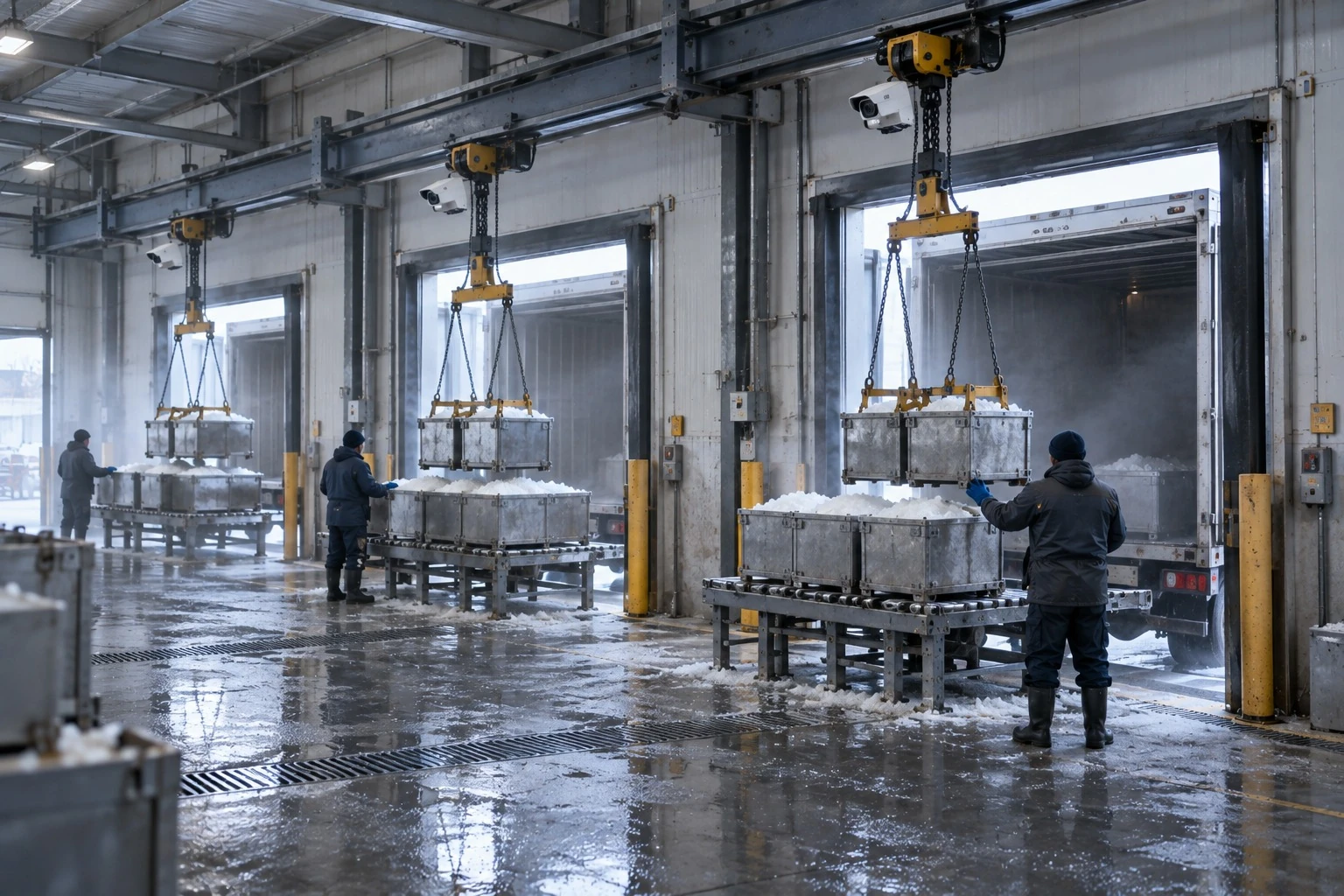
An Indian ice manufacturer was miscounting ice blocks as four trucks loaded at once. Brainy Neurals built an AI object counting system for its loading gates. The system watches all four conveyor cameras from one machine inside the plant. Counts land on the owner’s phone every hour, and no video leaves the site.
- Loading gates counted at once
- 4
- Frames analyzed per second, per camera
- 25
- Video streams sent to the cloud
- 0

Prasiddh Mori, Edge AI Engineer.

Rushabh Shah, Engineer.
Technically reviewed by Mitesh Patel, NVIDIA Certified AI Architect.
Published August 2026Last updated August 202612 min read
02
At a glance
Quick Answers
Q1 · Problem
What problem did this solve?
Ice blocks loaded onto trucks at four gates were miscounted whenever the owner stepped away. One person cannot watch four conveyors at once, and the tallies drifted with every distraction.
Q2 · The build
What did Brainy Neurals build?
Brainy Neurals built an AI object counting system for an Indian ice manufacturer. A custom-trained detector watches four conveyor cameras from one on-site machine and counts every block.
Q3 · Outcome
What changed after it went live?
Counting now runs unattended at all four loading gates. The owner reads hourly and daily per-gate reports on a mobile app, with no video streamed to the cloud.
Q4 · Fit
Who else could use this?
AI object counting fits any operation that moves identical items past a fixed point all day. Warehouse docks, bottling lines, brick yards, and parcel belts all qualify.
- Industry
- Manufacturing
- Sub-vertical
- Ice production
- Client
- Indian ice manufacturer
- Engagement
- AI counting system
- Timeline
- Not disclosed
- Capabilities
- Computer vision, edge AI
- Delivery
- Project-based delivery
- Video to cloud
- None
03
Why did the count keep going wrong?
An Indian ice manufacturer loads trucks at four gates at once, each gate fed by its own conveyor. Every block that leaves is revenue, and the tally was whatever the nearest person remembered. When the owner stood on the dock, the numbers held together well enough. When the owner traveled, they drifted, and nobody could say by how much. The plant already had cameras at every gate, installed for security rather than video analytics. They watched everything and counted nothing.
The drift was nobody’s fault in particular, and no surprise either. Manual counts drift, and they drift hardest where nobody watches the person counting.
04
What do plants usually try first?
Four routes, all reasonable.
| Approach | What it gets right | Where it stops | Who it still suits |
|---|---|---|---|
| A counter at each gate | No new technology | Four gates, shifts, and disputes | One gate, short loading hours |
| Beam or weight sensors | Cheap, counts every crossing | Counts hands and debris too | Single-file items, clean flow |
| Cloud video counting | No on-site hardware | Bandwidth and a monthly bill | Few cameras, strong uplink |
| On-site AI, our route | Counts only blocks, all gates | Training footage, hardware up front | Parallel gates, high volume |
The trade is an old one. A 2016 edge computing survey named response time and bandwidth cost as reasons to process video on site[2].
Where it stops
Tried one of these and hit the wall?
05
How we designed the counting system
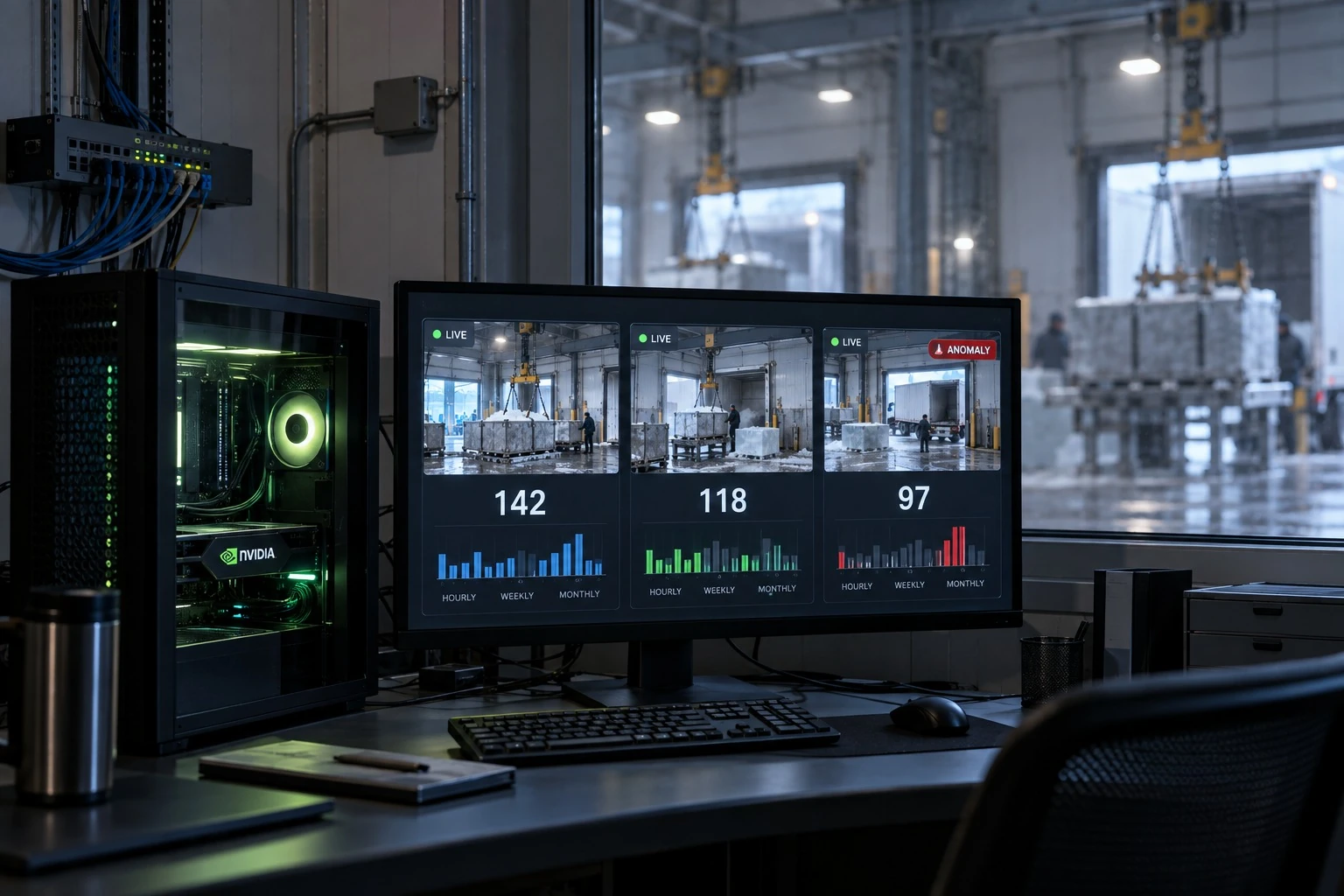
Brainy Neurals built the whole counting path to run inside the plant, on one machine the client bought once. That machine carries a graphics processing unit, a GPU, sized for real-time object detection on four streams. Each gate’s camera feeds it, and a custom-trained object detection model finds every block. A tracker follows each one, and a fixed line turns each exit into one tick.
Video never leaves the plant, and the numbers are the only thing that does.
The first decision was what should be allowed to cross the wire beyond the plant. We rejected streaming four cameras to cloud machines, because the bill grows with every camera added. And a count that depends on an uplink stops when the uplink does. So only counts leave the building, a few bytes an hour instead of four video streams.
The second decision put all of the intelligence at the gate, with the cloud only storing and serving. A phone can ask for a report, but it can’t slow a gate down.
06
The technology stack we used
Every layer here earns its keep on one machine and one bill. The same layout appears in our edge AI builds on smaller boards, with the hardware swapped.
On-site capture and inference
Cameras
The gate cameras already there
Compute
One GPU workstation, bought once
Detection model
Custom-trained block detector
Counting and reporting logic
Tracking and counting
One identity, count on cross
Stream scheduling
Shared inference, fixed rotation
Local buffering
Counts stored on site first
Cloud and mobile delivery
Cloud backend
A small hosted count service
Mobile app
One codebase, both platforms
07
How does one block get counted?
One block, gate to tally, in the order the system sees it, with nothing waiting on a network.
- 01The camera at each gate feeds live frames to the plant machine, all four streams at 25 frames per second.
- 02The detector finds every ice block in the frame and draws a tight box around each one.
- 03The tracker links those boxes from frame to frame, so every block keeps one identity as it moves.
- 04The gate’s tally rises by exactly one when a tracked block crosses its fixed counting line.
- 05The count is stamped with its gate and hour, then stored on the plant machine first.
- 06The totals sync to a small cloud service, and the mobile app updates every gate’s numbers.
Six steps, and only the last one leaves the plant. Everything before it happens on the machine beside the gates, whether the internet is up or not.
Want this walked through for your gates? Book 30 minutes with Mitesh Patel.
No pitch. If it is not a fit, you will know in five minutes.
08
Three problems that nearly beat us
The first counts came in high, because ice blocks travel nose to tail. Two touching blocks read as one, then two, then one again, and every flicker minted a phantom block. The phantoms went straight onto the invoices.
Then the dock door began making weather of its own. Cold air met warm air, the lenses fogged, and midday glare off wet ice washed whole frames out. The detector began missing blocks it had found without trouble an hour earlier.
And four streams fought over one machine. Scheduled naively, one gate’s frames queued behind another’s, and a queued frame is a skipped frame.
Tracking benchmarks count identity switches and ghost trajectories among the standard errors, which are polite names for phantom blocks[3]. These are the weeks when a plant brings in specialist engineers instead of losing a season.
09
How we solved each one
Each of these fixes reads short on the page, and none of them was short to find.
Phantom blocks
We stopped counting detections and started counting crossings instead. The tracker gives every block one identity, and the tally moves only when that identity crosses the line. Once. And the phantoms vanished from the invoices for good.
The dock door
We collected footage from the worst hours, fog, glare, and night loads, and retrained on those frames. We also moved each counting line clear of the mist.
Four streams, one machine
We batch the four streams through the model on a fixed rotation. Every gate gets its slice of every cycle, so all four hold 25 frames per second. No gate starves.
Conveyor belts, incidentally, are older than the light bulb.
Finding these three ate most of the build, so a proof of concept now runs this gauntlet first.
10
What changed once it went live?
| What | Before | After |
|---|---|---|
| Who keeps the count | Whoever stood closest | The system, at every gate |
| When the owner travels | The tallies drifted | Nothing changes |
| Video sent to the cloud | Quoted as the fix | None |
| Cost that grows per camera | Cloud streaming and bandwidth | Neither |
| The loading report | End-of-day memory | Hourly and daily, per gate |
We do not publish model accuracy figures here, on this page or any other. What we will publish is what runs on the counts: every hourly and daily report, at every gate.
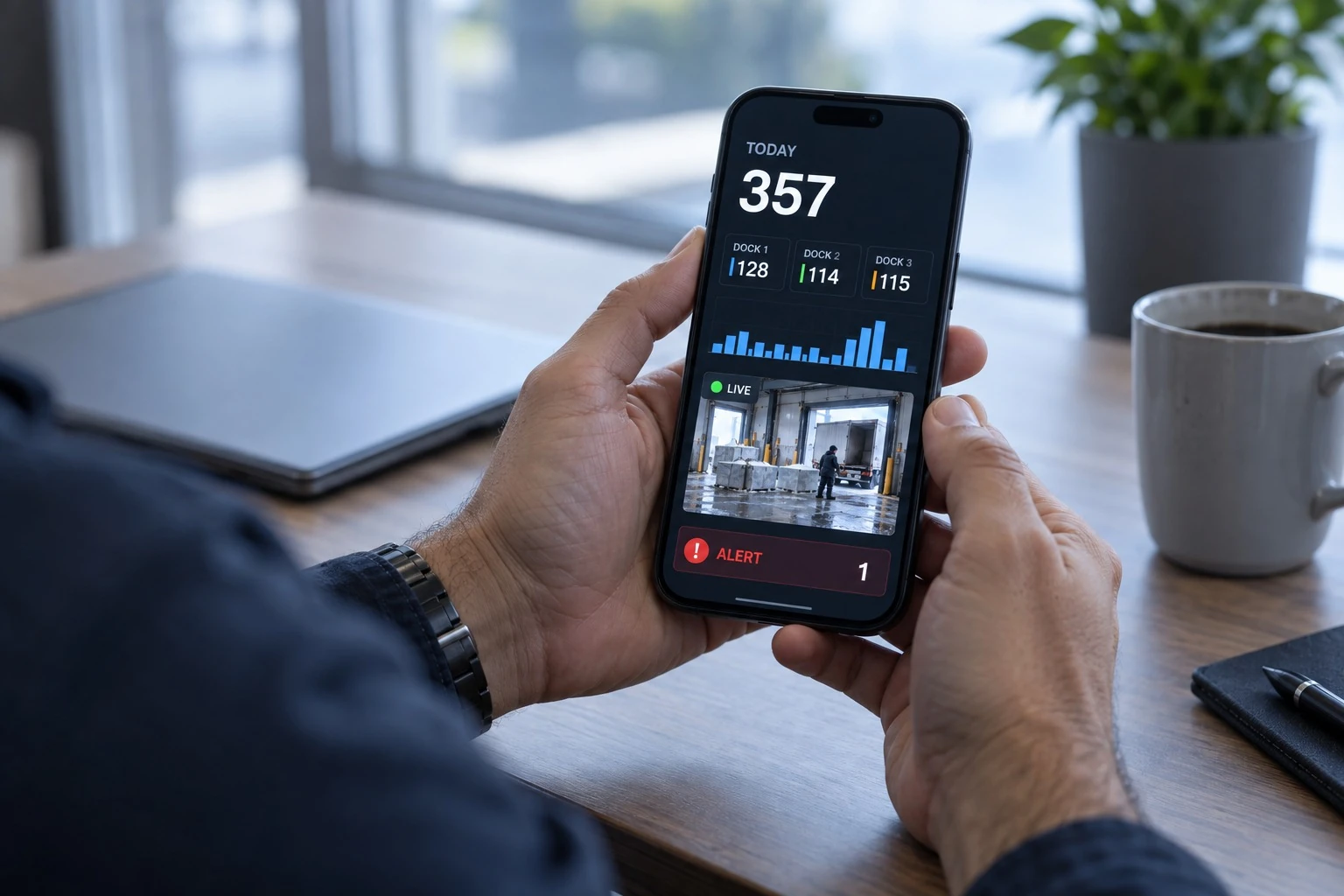
Day to day, the owner opens the app from anywhere and reads what left each gate that hour. Because the machine was bought once, the cost of counting stopped scaling with the camera count. And a dispute now ends with a report, not a recount at the gate. The recount, with a loaded truck idling beside it, is the ritual this build retired.
Tell us what to count
What do your cameras need to count?
11
What runs at the plant today
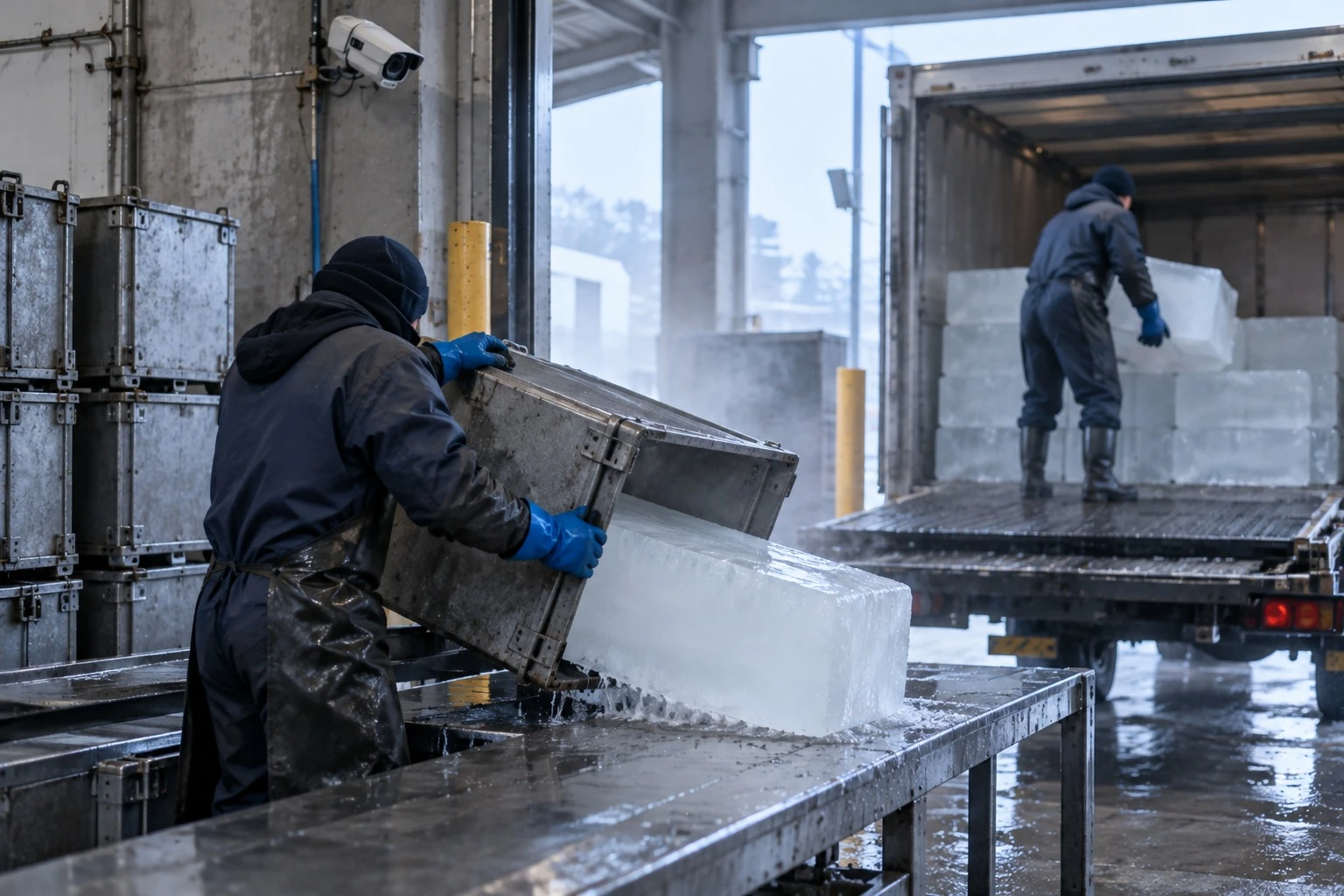
The AI object counting system runs in production at the plant, on the same machine the first pilot used. All four gates report every hour and every day, and the owner reads them from anywhere. Nothing about the loading day itself changed for the crews on the belts. The belts keep running, the trucks keep filling, and the count keeps happening above everyone’s head. For manufacturing operations, that is usually exactly the right amount of AI to ship. The best systems get watched, not operated.
12
What would we change next time?
- 01
Film the worst hour first
We trained on clean daylight footage and met the fog later, at the door. The ugliest frames a site produces are the ones to start with.
- 02
Count crossings, not detections
A tally that moves on every detection is a random number generator with confidence. We knew the rule going in and still spent a week relearning it.
- 03
Load all four gates early
The one-gate build ran beautifully for a week and taught us nothing. Four parallel streams is a different machine, so test the full load from day one.
- 04
Decide what crosses the wire early
Counts, not video, was the cheapest decision anyone made on this project. But it shaped the hardware, the backend, and the monthly bill, so make it before anything else.
13
Where else does camera counting fit?
AI object counting keeps a running tally of items passing a camera by detecting and tracking every one of them. It belongs wherever identical products pass a fixed point faster than anyone can count.
| Industry | The equivalent problem | What changes in the build |
|---|---|---|
| Logistics | Warehouse dock cameras counting pallets and parcels out | Wider classes, one line per door |
| Retail | Back-room cases counted onto the shop floor | Smaller items, counts in both directions |
| Agriculture | Produce crates from the packhouse onto trucks | Outdoor light, seasonal retraining |
| Construction materials | Cement bags and bricks loaded onto flatbeds | Dust-tolerant training, rugged mounts |
| Beverage bottling | Cases leaving the line faster than sight | Higher frame rates, tighter timing |
| Food processing | Frozen cartons from freezer to dispatch | Frost-proof retraining, cold-rated housings |
Porting takes fresh footage of the new item, a retrained detector, and hand tallies beside it until they agree.
14
What buyers ask us first
01Can AI count objects from existing CCTV cameras?
Usually, yes. Counting needs a clear view of the items and steady framing more than it needs new cameras. We test your current footage first, and we only ask for new mounts where a view fails.
02How does AI object counting work?
A detection model finds each item in every frame the camera produces. A tracker then links those detections across frames into one identity per item. The count then rises exactly once when that identity crosses a set line.
03How accurate is AI object counting?
Accuracy depends on the item, the camera view, and the training footage, so no honest vendor quotes one number. A serious counting system is validated against hand tallies before go-live, on your gates and in your light.
04How long does an AI counting system take to build?
A proof of concept on your own cameras usually takes a few weeks. Production follows once the counts hold against manual checks across shifts, weather, and a full loading day.
05How much does an AI object counting system cost?
The cost depends on the camera count, the item itself, and what hardware already exists on site. Brainy Neurals scopes it from a short call and sample footage, then quotes a fixed price. An AI readiness assessment tells you first whether your cameras and site can carry it.
06Is edge AI cheaper than cloud AI for video?
For always-on video, usually. Edge hardware is bought once per site, while cloud inference sends a bill for every hour of video streamed. A few cameras running short hours can still favor the cloud. Four gates running all day do not.
07What else can the same cameras count?
Anything that moves past the lens as a distinct object can be counted this way. The same pipeline counts pallets, crates, bags, cases, and vehicles from the same camera mounts. Each new item needs its own footage and a validation run against hand tallies.
Sources cited on this page
- [1]DeHoratius N, Raman A. Inventory Record Inaccuracy: An Empirical Analysis. Management Science. 2008;54(4):627-641. DOI 10.1287/mnsc.1070.0789.
- [2]Shi W, Cao J, Zhang Q, Li Y, Xu L. Edge Computing: Vision and Challenges. IEEE Internet of Things Journal. 2016;3(5):637-646. DOI 10.1109/JIOT.2016.2579198.
- [3]Milan A, Leal-Taixe L, Reid I, Roth S, Schindler K. MOT16: A Benchmark for Multi-Object Tracking. arXiv. 2016. arXiv:1603.00831.
If identical products leave your site faster than anyone can count them, tell us what to count.
15
The services behind this build
Video analytics
Counting, monitoring, and events from the cameras a site already owns.
Computer vision development
Detectors trained on your product, your belts, and your worst lighting.
Edge AI and embedded services
The same counting pattern on smaller boards, when a workstation is too much.
Robotics and hardware automation
For when a count must stop a belt or open a gate itself.
Hire AI developers
Vision and edge engineers who join your team for the hard weeks.
AI in manufacturing
Counting, inspection, and monitoring for plants that cannot wait on a network.
A proof of concept is the fastest and cheapest way to test counting on your own footage. AI consulting helps choose the hardware before anything is bought. An AI readiness assessment checks whether your cameras are enough, and the industries hub shows where this already runs.
16
Other builds cut from this pattern
Three more Brainy Neurals builds, each of them shipped into a working environment rather than left as a demo.
Overhead Line Geometry Measurement
Stereo cameras on a moving train measuring wire geometry, with inference on the train.
Case study · 02AI Diet Assistant for Gastroenterology
Clinical dietary guidance generated under review gates, live in a healthcare setting.
Case study · 03Personalised AI Meal Planning for Chronic Care
Structured meal plans built from messy personal health data, grounded and reviewable.
Cite this case study
Mori, Prasiddh. Counting every ice block leaving the plant. Brainy Neurals, August 2026. https://brainyneurals.com/case-studies/ai-object-counting-ice-blocks/