








01 · Case Study · Sports Technology
AI Golf Swing Analysis in Sixty Seconds
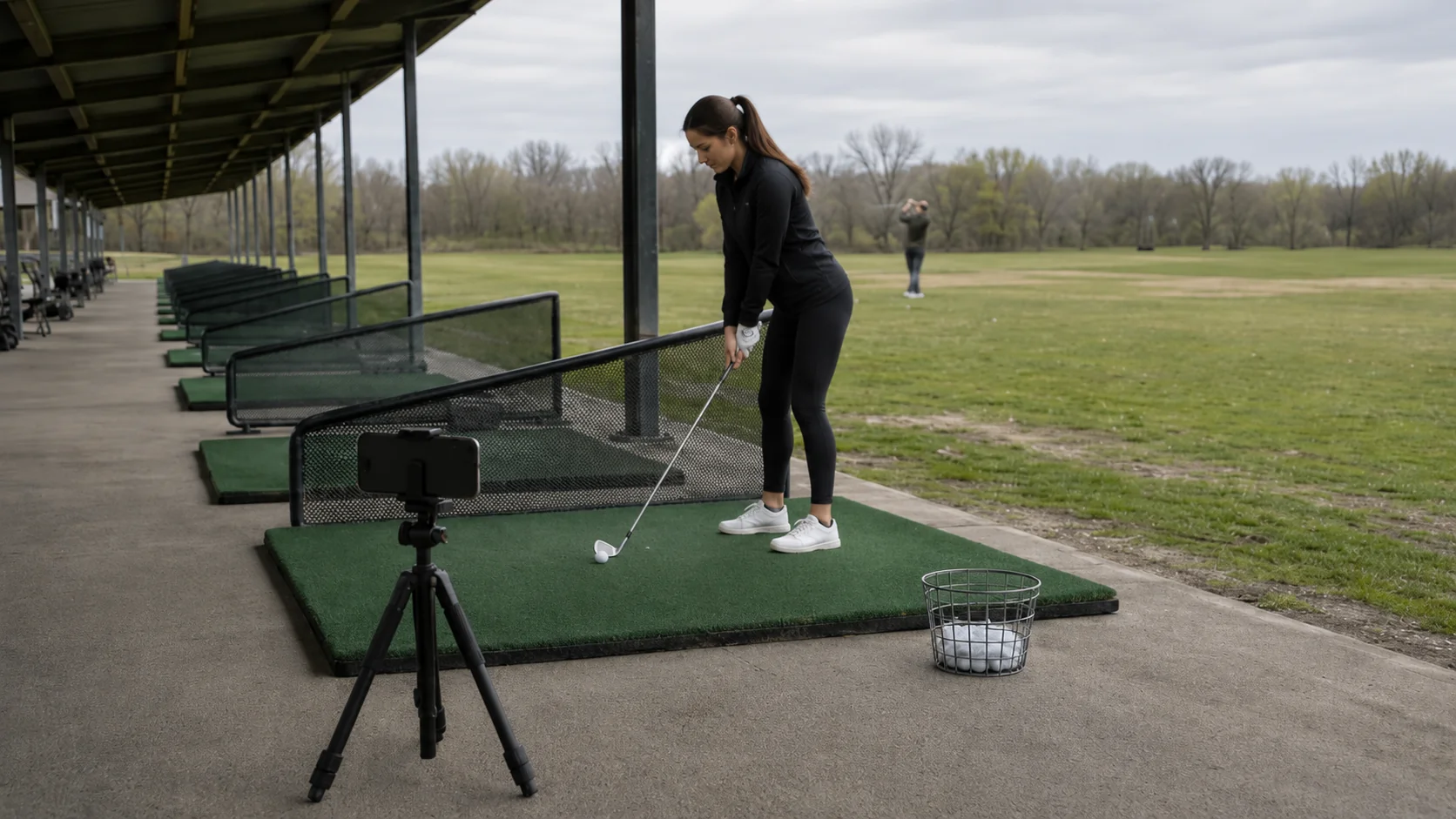
A US sports technology company needed professional-grade golf swing analysis without motion capture hardware or coaches spending forty-five minutes per video.
Brainy Neurals built a computer vision engine that measures each swing from two phone videos and writes the report.
A full analysis now returns in under 60 seconds, upload to finished report.

Rushabh Shah, Senior AI Research Engineer
Technically reviewed by Mitesh Patel, NVIDIA Certified AI Architect
Published August 2026 · Last updated August 2026 · 12 min read
02 · Quick answers
The engagement at a glance
What problem did this solve?
Golf academies spent 30 to 45 minutes of coach time on every swing video, and lab-grade motion capture priced everyday golfers out.
What did Brainy Neurals build?
For a US sports technology company, a cloud engine that reads two phone videos and returns scored faults, annotated footage, and a written report.
What changed after it went live?
Turnaround fell from a 30 to 45 minute wait to under 60 seconds, and thousands of practice swings now clear every week.
Who else could use this?
Any organization judging human movement from ordinary video: baseball and cricket academies, physiotherapy clinics, ergonomics teams, and fitness platforms.
- Industry
- Sports technology
- Sub-vertical
- Golf coaching platforms
- Client
- A US sports technology company
- Engagement
- End-to-end platform build
- Timeline
- Phased build, now live
- Capabilities
- Computer vision, generative AI
- Delivery model
- Dedicated project team
03 · The old process
Why manual swing analysis broke down
Our client, a US sports technology company, runs a golf coaching platform for academies and everyday players. Every uploaded swing needed a professional read, and the only source was a coach with spare time. They brought the measuring half to Brainy Neurals as a computer vision development project.
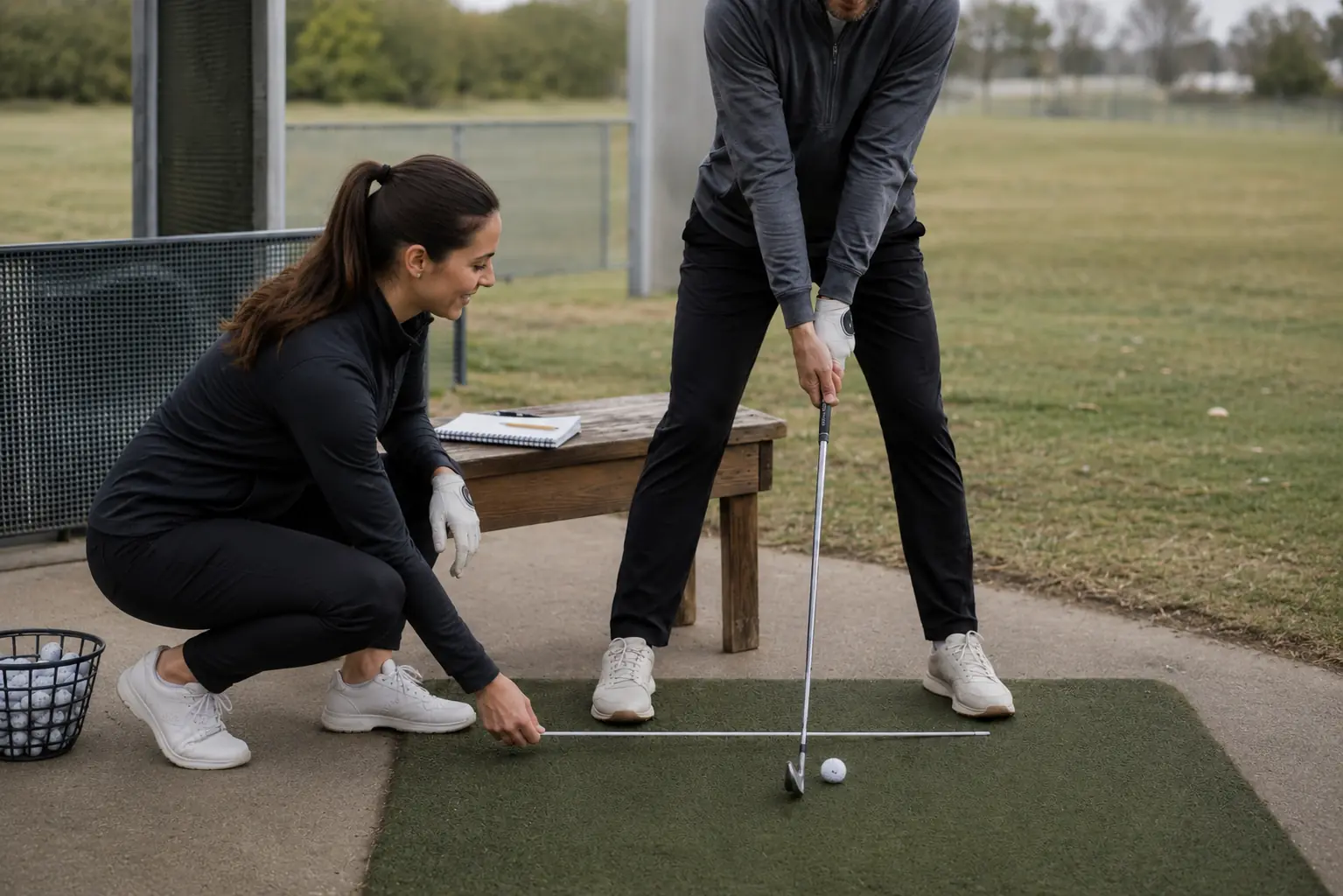
- A coach scrubbed frames by hand, drew every swing plane, and typed the report. Thirty to 45 minutes, every swing.
- Two coaches often disagreed about the same swing. Trained observers rating movement quality on video reach only fair to good agreement.
- A precise answer meant an optical motion capture room: markers, calibration, and hardware costing tens of thousands of dollars.
- Club head speed tracks playing skill closely, so the fastest object in the frame matters most.
04 · Four routes and this build
What do coaches try before AI?
| Approach | What it gets right | Where it stops | Who it suits |
|---|---|---|---|
| Slow-motion apps | Cheap instant replay, any phone | Nothing is measured, so a coach still reads every frame | Casual self-review |
| Launch monitors | Precise club and ball data | Reports the outcome, not the cause | Club fitting |
| Motion capture labs | Gold-standard 3D measurement | Markers, rooms, and cost lock golfers out | Tour and research |
| Research pose models | Open models find joints and events | Joints are not a diagnosis, papers ship nothing | Teams with ML staff |
| This build | Measures, diagnoses, writes the report | Needs both camera angles | Platforms serving thousands of golfers weekly |
Tried this and hit the same wall?
Tell us where it stopped05 · Architecture
How we designed the analysis engine
The engine treats a golf swing as a measurement problem, not a judgment call. Two phone videos go in, one face-on and one down the line. The swing is cut into eight causal phases and checked against twelve known faults.
Each fault returns a graded severity score, so a coach knows what to fix first. Early extension, sway, and casting come back scored.
The first big decision was to measure from plain 2D phone footage, no markers. We rejected calibrated multi-camera capture: the product lives on driving ranges and in back yards.
The second was to keep measuring and explaining strictly apart. Vision math decides what is wrong, and a language model only explains it. That boundary came out of our generative AI development work, and it is why a report cannot invent a fault.
“The camera never moves in a lab. On a driving range, everything does.”
06 · By role, not by name
The technology stack we used
Every heavy model runs in the cloud, because we ruled out on-device inference early. Layers are described by role, with what each choice beat.
| Layer | What we used | Why we chose it | What we ruled out |
|---|---|---|---|
| Body tracking | A high-precision full-body pose model | Joints drive every fault calculation | Mobile pose models |
| Club and ball | Custom-trained club and ball detectors | General detectors never saw a golf club | Colour and marker tracking |
| Silhouette tracking | A video segmentation model | Edges beat joints for sway | Background subtraction |
| Impact timing | Dense frame-to-frame motion analysis | It pins the exact impact frame | Audio impact detection |
| Coaching narrative | A fast hosted language model, one call per swing | One call, consistent age-adjusted report | Larger models, no gain |
| Serving and queues | A queued analysis service with priority lanes | Quick comparisons never queue behind reviews | One shared queue |
| Infrastructure | Shared cloud inference hardware, storage, callbacks | Shared instances keep memory flat | An autoscaling fleet |
07 · One request, end to end
How does the system analyze a swing?
What happens to one pair of uploaded videos.
- A golfer or a coach uploads two phone videos, one filmed face-on and one from down the line.
- The engine corrects orientation, classifies each view, and mirrors left-handed swings so measurements read the same way.
- Vision models track the body, the club, the ball, and the golfer’s outline through every frame.
- The swing is cut into eight phases, and motion analysis pins the exact impact frame.
- Twelve fault checks run on the tracked motion, each one returning a severity score a coach can act on.
- One language model call turns the measurements into a written report, and the annotated video renders beside it.
Diagram scrolls sideways →
Want this walked through for your setup?
No pitch. If it is not a fit, you will know in five minutes.
08 · Production reality
The four problems that nearly stopped us
And not one of the four showed up in the original estimate.
The pipeline crashed in production.
Segmentation, pose, and club tracking together exhausted accelerator memory whenever analyses overlapped, and the whole service went down with them.
The club head beat the cameras.
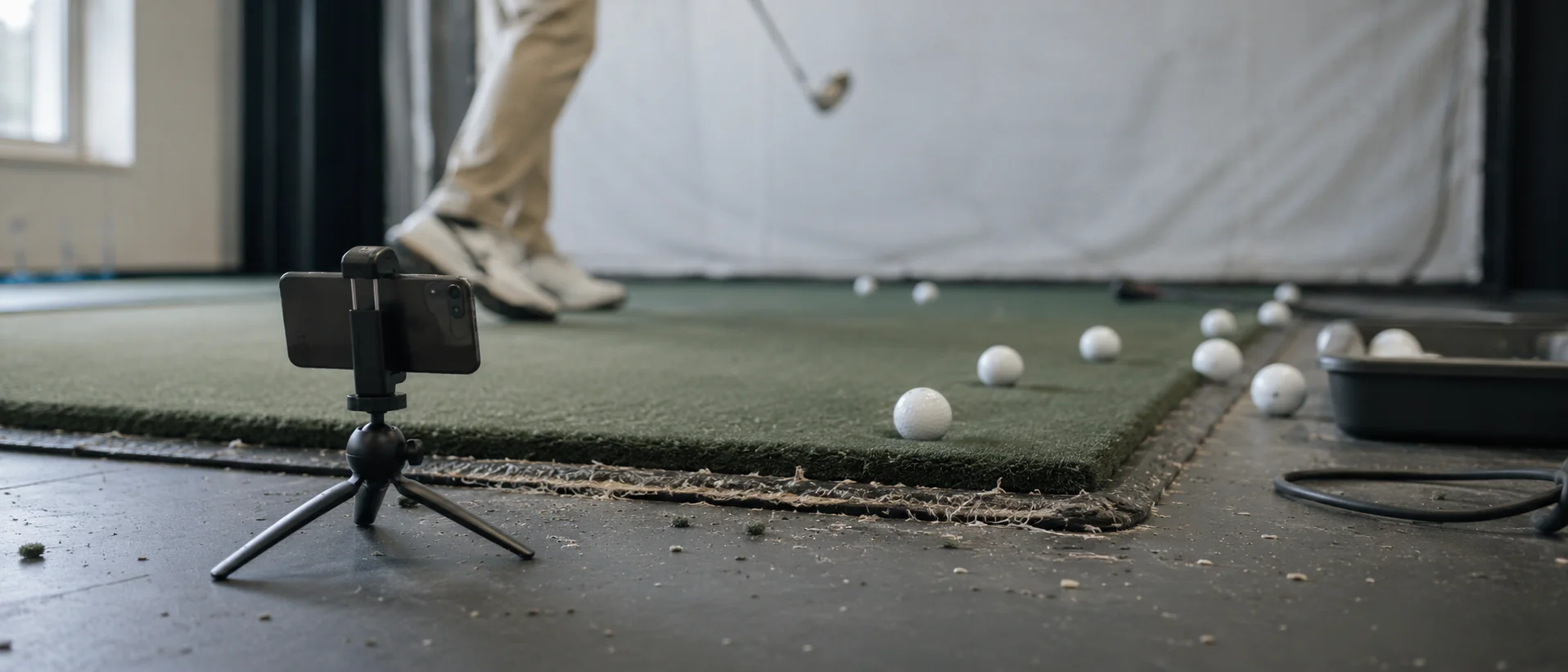
A well-struck driver head can pass 100 mph (161 km/h) through impact. At that speed it smears into a motion-blurred streak that general detectors simply lose.
The two views refused to line up.
Golfers film at different frame rates, resolutions, and orientations, so the same instant lived on different frame numbers.
The report bill kept climbing.
Each new analysis angle had bolted on another model call, and every swing quietly got more expensive to explain.
Where teams stall
This is the stretch of the build where platform teams usually stall.
It is where most decide to bring in specialist engineers who have shipped vision systems.
09 · Four fixes
How we solved each one
Each one had a fix, and none of the fixes were glamorous.
Crashes.
A resource manager now gates every request for accelerator memory. Models load once and are shared, and hard concurrency limits decide how many analyses run together. Crashes went to zero.
Club blur.
We trained dedicated club and ball models on real golf footage, indoors and out. Frame-to-frame motion analysis then catches whatever detection alone still misses.
Misaligned views.
Instead of the clock, the engine now anchors both videos to the swing itself. Phase boundaries, not timestamps, align the two videos, so frame rates stopped mattering.
Cost.
We rebuilt the whole reporting step as one structured call. The full diagnosis goes in once, and one call writes the whole narrative.
Diagram scrolls sideways →
That loop of breaking things and then hardening them is built into how Brainy Neurals runs its engagement models.
10 · Measured, not estimated
What changed after go-live?
- A dual-angle swing review now finishes in under 60 seconds from upload to report, down from 30 to 45 minutes.
- Each coaching report now costs roughly 90 percent less to generate, measured against the platform’s previous per-report spend.
- Memory crashes fell from a recurring incident to zero after the concurrency limits shipped, with no added hardware.
- The platform absorbs 1,000 to 5,000 swings per week without added analysts. Serving is the cheap part, because one shared inference tier carries the whole load.
So coaches now review outcomes instead of scrubbing raw footage frame by frame. The platform sells professional-grade analysis at a consumer price, because no human sits in the loop per swing.
Start here
Tell us what you are building
Two phone videos became a measured diagnosis here. Tell us what your footage is, and what a finished answer would have to say.
Mitesh Patel · Founder & Director
11 · Live
What is running in production today
Brainy Neurals built this engine for a US sports technology company. It now runs in production as the analysis backbone of their whole golf platform. Uploads arrive around the clock from academies and individual golfers, and every one comes back scored and explained.
Quick swing-to-swing comparisons run as lightweight priority tasks, so a player can track a change between range sessions. Coaches spend those saved half hours actually coaching instead of annotating video.
Raw footage in, performance analytics out, and that is the whole contract.
12 · Four lessons
What we would do differently
Plan the memory budget on architecture day
We added concurrency gating only after production crashes. That order was backwards, and it cost real downtime before it ever cost us a redesign.
Consolidate the language layer early
Each added model call looked small, so nobody priced the pile until it was quietly the largest line in the reporting step.
Anchor time to the movement
Chasing timestamp alignment was wasted effort that phase anchoring, not the clock, later made completely irrelevant.
Keep measuring and explaining separate
The vision layer diagnoses and the language layer explains, strictly apart, and neither crosses over.
“The vision layer diagnoses and the language layer explains, and neither crosses over.”
13 · Portability
Where else does this pattern fit?
Video-based movement analysis is a system that measures body motion from ordinary footage by tracking key points across frames.
It fits wherever technique, safety, or physical recovery depends on how a movement is performed.
| Industry | Equivalent problem | What changes |
|---|---|---|
| Baseball, cricket academies | Pitching reviews eat hours | New phases, new faults |
| Physiotherapy clinics | Gait judged by eye | Clinical faults, progress tracking |
| Warehouse safety | Lifting posture sampled, not watched | Existing cameras, ergonomic checks |
| Fitness platforms | Form checks stop at one trainer | Lift phases, not swing phases |
| Performing arts schools | Technique corrected from memory | Pose lines, timing to music |
The nearest jumps are healthcare and manufacturing, where movement is already judged on video.
Porting the pattern takes a new phase definition, a new fault library, and honest footage, good and bad.
14 · Six answers
Questions buyers usually ask
Q1How accurate is AI golf swing analysis?
Accuracy starts with what is actually being measured, and this engine reads joint and club positions on every frame. It runs fixed biomechanical checks, so two identical swings always score identically. Two human coaches watching one swing often disagree, and the machine does not.
Q2Does AI replace the golf coach?
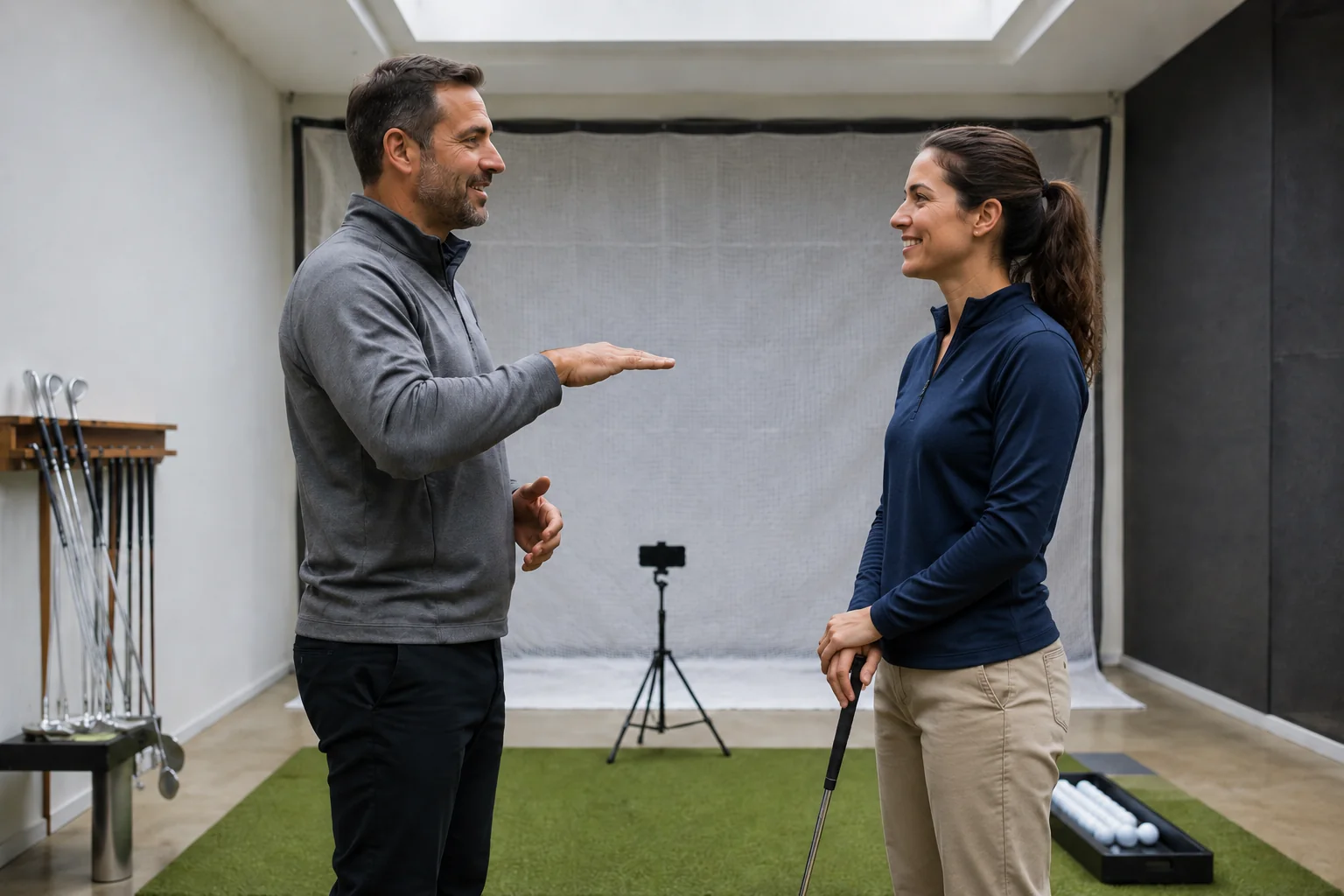
No, and it is not built to. The engine does the measuring and the first-pass explanation, which used to consume the lesson. Drills, feel, and course strategy stay with the coach, who now starts from a finished diagnosis.
Q3Do golfers need special cameras or sensors?
No sensors, no markers, no launch hardware. Two ordinary phone videos, one filmed face-on and one down the line, are enough. Higher frame rates sharpen the impact math, and the engine handles mixed formats without complaint.
Q4Does it work for left-handed and junior golfers?
Yes to both. Left-handed swings are mirrored before any measurement runs, so every check reads exactly the same way. Reports adjust their tone by age, so a junior gets encouragement and an adult gets biomechanics.
Q5How long does a system like this take to build?
In phases. A working single-view measurement pilot always comes first, then the fault library, the report layer, and production hardening. An AI readiness assessment is how we scope those phases against your footage and volume.
Q6What does an AI swing analysis platform cost?
Costs follow the fault count, the camera angles, the report depth, and the throughput you need. Serving is the cheap part, because one shared inference tier carries the whole load. Scope is where the money lives, and a 30-minute call settles most of it.
Ready to scope the build?
Tell us about your project.
15 · Five services, one practice
The services this was built from
Five services and one industry practice built this.
Computer vision development
The tracking that turns phone footage into measurements.
02 / 06Generative AI development
The single call that writes each report from measured faults.
03 / 06Video analytics
Frame-by-frame pipelines pointed at cameras you own.
04 / 06AI proof of concept
How the first working slice gets proven cheaply.
05 / 06AI consulting
Architecture calls, like cloud versus device, made before code.
06 / 06AI in sports
Performance analytics builds across sports beyond golf.
Where would this start for your platform? An AI readiness assessment maps it, and who we help spans past sports.
16 · Related case studies
Other builds with this shape
Same shape, other industries: measure the physical world, then explain it plainly.
Overhead Line Geometry Measurement
Five wire parameters measured from a moving train.
HealthcareAI Diet Assistant for Gastroenterology
Clinical guidance turned into answers patients follow.
Chronic careAI Meal Planning for Chronic Care
Personal constraints turned into daily plans for chronic care.
CITE THIS CASE STUDY
Shah, R. (2026). AI Golf Swing Analysis in Sixty Seconds. Brainy Neurals. Published August 2026. https://brainyneurals.com/case-studies/ai-golf-swing-analysis/